Our Impact
Learn how we turn waste into a climate solution.
Making a Carbon-Negative Impact
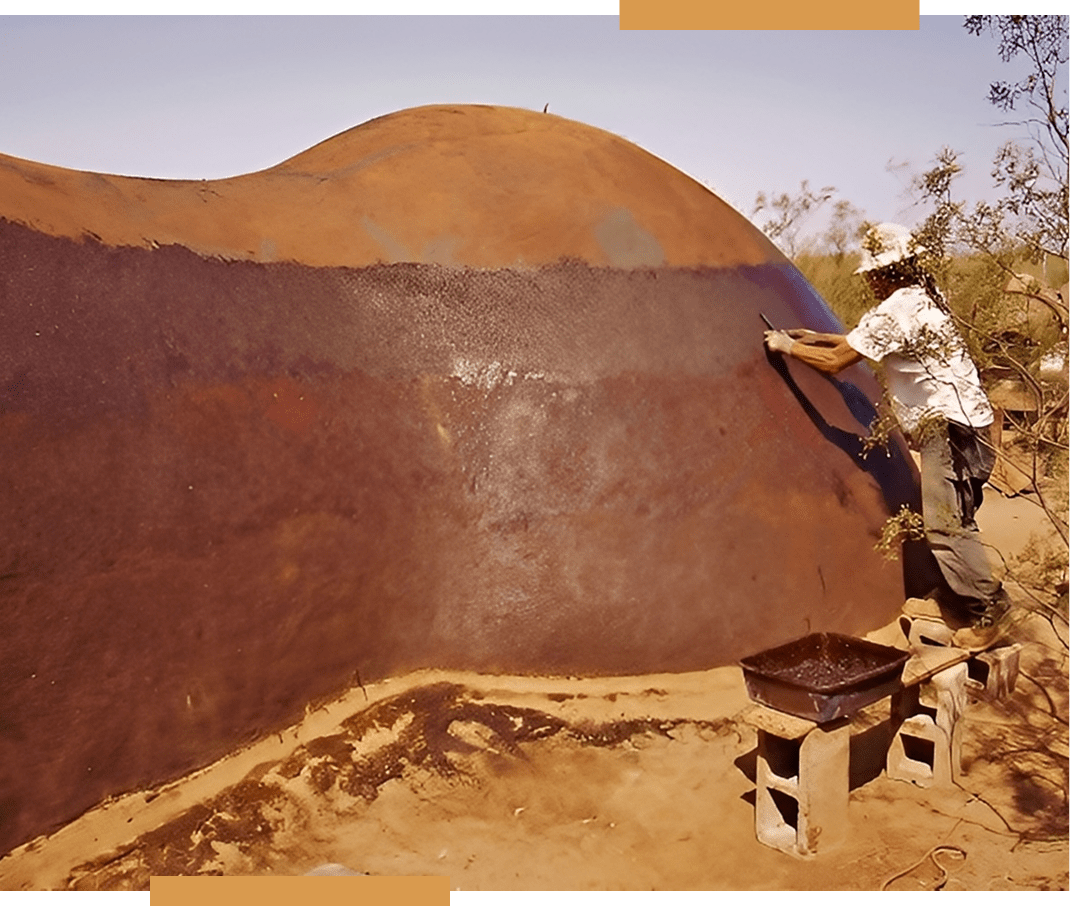
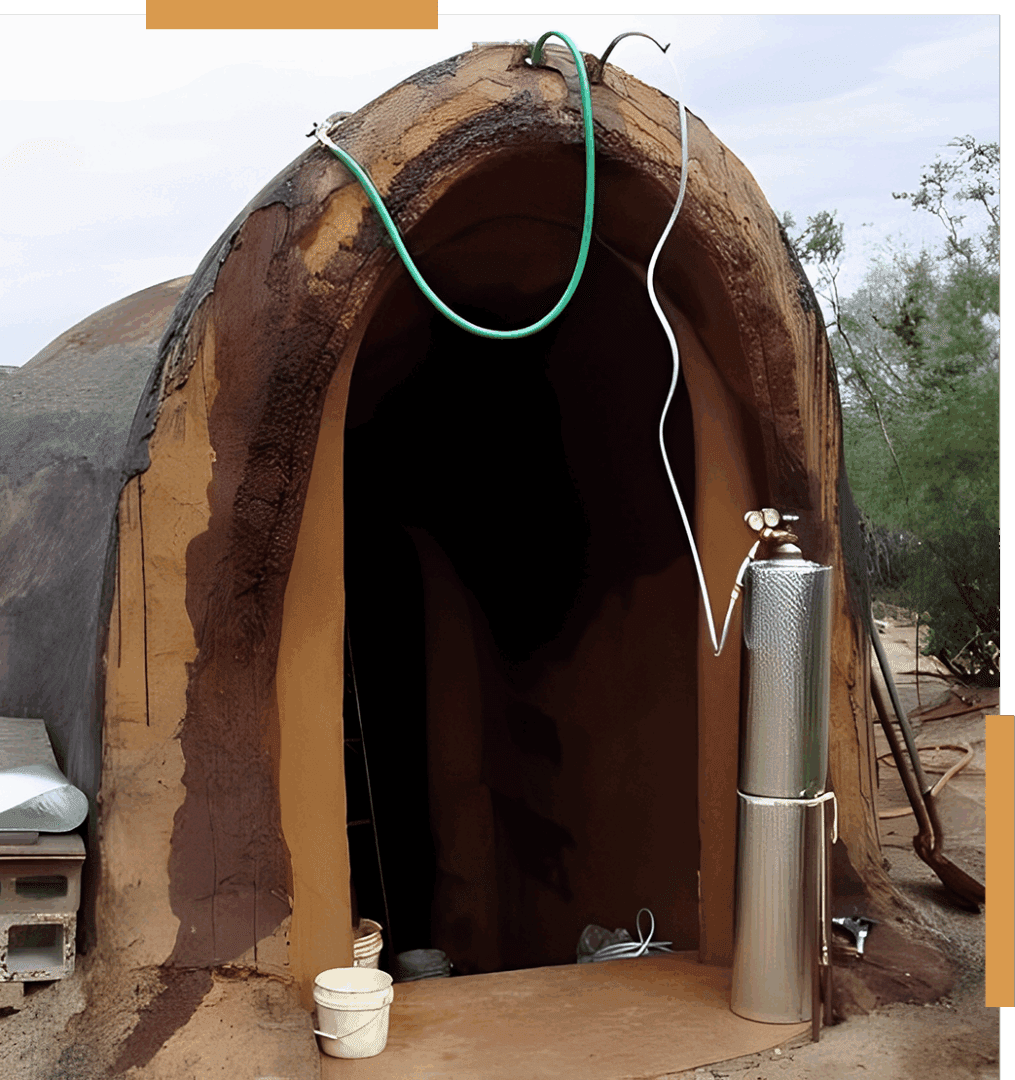
Ferrock is officially carbon-negative. Lab tests show it absorbs 8–11% of its weight in CO₂ during curing. This means every panel actively helps reduce atmospheric carbon.
A Dual-Benefit Production System
The same process that captures carbon also produces hydrogen gas, a clean-burning fuel. In a closed-loop system, this hydrogen could be harvested to create a dual-benefit system, providing both a valuable building material and a renewable energy source.
Our Waste-to-Walls Solution
Our process transforms what others discard into high-performance infrastructure. Ferrock’s unique chemistry turns waste materials into a climate-positive solution, proving that you can build for a better planet. As our founder, Dr. David A. Stone, puts it, "This is not carbon-neutral. This is carbon negative."
A Zero-Compromise Approach
Ferrock contains no Portland cement, meaning our production process avoids limestone mining, fossil-fuel-based kilns, and harmful emissions.
We Use Recycled Materials
Environmental Advantages at a Glance
| Feature | Portland Cement | Ferrock |
|---|---|---|
| CO₂ Released per Ton | ~930 kg | -110 kg (captured) |
| Clinker Process | Yes | No |
| Recycled Material Content | Low | High (steel, fly ash) |
| Hydrogen By-Product | None | Yes |
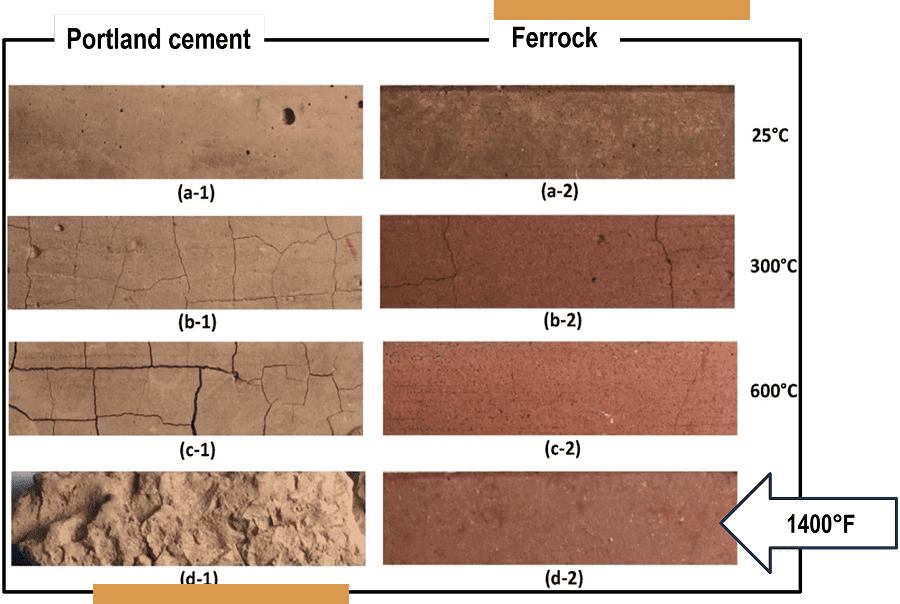
| Saltwater/Fire Resistance | Limited | Excellent |
Let's Build a Carbon-Negative Future
Ferrock is a pathway to restorative construction. We can make net-zero the baseline and go beyond.